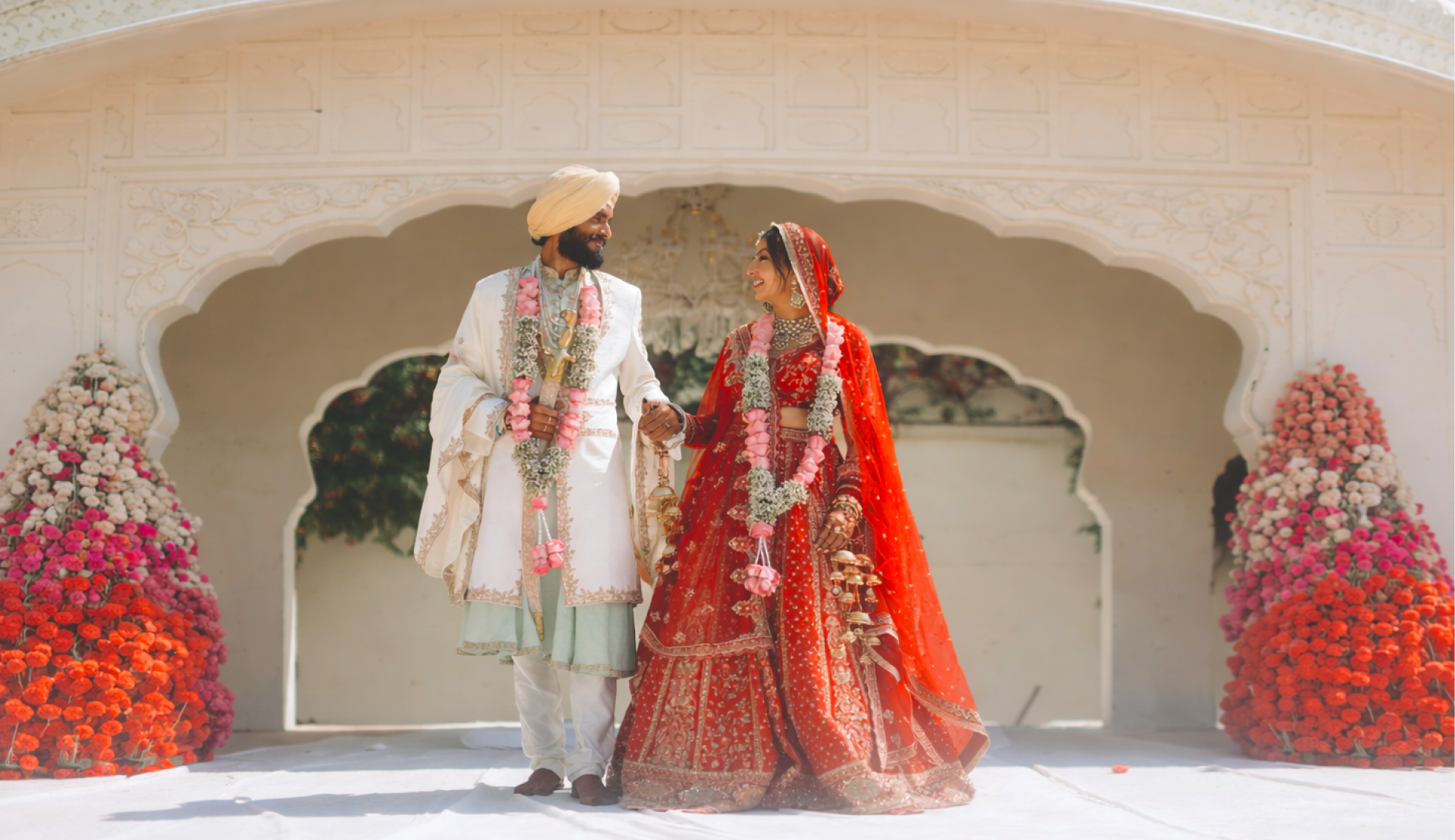
Wedding planning is a nuts time, and the tug of war you feel isn’t always between you and your spouse vs. those flowers, but what feels right for you two against what your family has done for generations …. We’ve all been there: Will I be able to get the professional wedding planner and make them understand that the muhurat can’t so much as be nudged ahead by even 5 minutes, or will they have an altercation with the family pandit ji who has been advising your household for generations? It’s a valid worry! You want the business, and you want the look, but you also want the ceremony’s soul to remain. The good news? Who says we have to choose one or the other? The only way to nail that balance is with a great planner, who acts as the bridge and buffer between your dream mood board and your family’s precious heritage.
So, in this blog, we explore whether a planner works with your family pandit & traditions? Stay tuned with this blog
The Bridge Between Modernity and Tradition
A wedding planner only cares about the “look” of a wedding, the drapes, the lighting and who made it onto guest list, there’s this pervasive misunderstanding. But for a planner working in Indian weddings, the No. 1 task is more likely to be cultural choreography.
The rite is meant to be the family Pandit’s, the terrain planner’s. When there is an alignment of these two forces a wedding can feel high-end and deeply spiritual. This is what that interagency cooperation looks like in reality.
Respecting the "Muhurat" and Timing
Timing is everything as so often in Indian traditions. When the Pandit says that the varmala must happen precisely at 10:18 am, a wedding pro doesn’t think “Oh God, we’ll be rushing around like chickens!” Instead, that is the minimum viable product and a deadline.
- Logistical Padding: The whole day revolves around these holy timings. They ensure that the baraat of the groom arrives on time for the ritual, and not like a last minute rush job.
- Vendor Alignment: The planner will also coordinate with the caterer and photographers to make provisions for “quiet moments” as well as ensuring the feast is ready immediately after the ceremony.
Coordinating with the Family Pandit
Your family Pandit is not just the man who will officiate your wedding, but he’s usually a life advisor who has shepherded you through different stages of life. It is a dynamic that planning professionals can understand and appreciate.
1. The Samagri Management
The items on this list can vary according to the nature of the puja and what the tarpan is being offered for. A planner removes this work from your mother’s (or aunt’s) hands. They tunnel into the Pandit weeks ahead, with some very detailed instructions, down to exactly which kind of ghee and counting out how many betel leaves, and also make sure that everything is well organized in labeled kits for each ceremony.
2. Mandap Logistics
As you know that pandit needs a unique setup to perform the Vedic rites comfortably. Planners also make sure that the Mandap is not just beautiful but functional. This contains.
- Ventilation: When figuring out how to allow the smoke from the hawan (sacred fire) to escape without making your alarm go off or suffocating your guests.
- Seating: Comfortable and traditional seats with direction (if any e.g., East) matching to the auspiciousness of couple and pujari.
Navigating Family Traditions and Micro-Customs
Every family has micro traditions, the goofy, wonderful things that are specific to your particular family or heritage. Be it the exact style Gauri Puja is conducted or lyrics of welcome song - all such details are documented from your first visit that was unattainable during pre-wedding bookings anywhere in the past.
- The "Buffer" Role: Since rituals may make more people tense. A planner is the neutral observer in the room, there to make sure that tradition plays out with less of the “chaos” it so often involves.
- Cultural Sensitivity: If you use experienced planners who have spent time on the ground in country and/or educated their local on-site staff, then they know what it means to be culturally sensitive: when to shut up or not engage, what should go on their heads, how to approach relationships with seniors with respect.
Why This Collaboration is a Win-Win
When you bust out a planner to help your Pandit, you get the best of both worlds:
| Feature | The Pandit’s Focus | The Planner’s Focus |
| The Ceremony | Spiritual Accuracy | Visual & Audio Clarity |
| The Timeline | Auspicious Timing | Guest Comfort & Flow |
| The Venue | Ritual Sanctity | Aesthetic Perfection |
By handling the “heavy lifting” of logistics, planners allow the Pandit to focus solely on blessing his or her son or daughter’s marriage and, more importantly, keep attention on their parents so they can be in the moment and not run around trying to wrangle vendors.
Conclusion
In the end, your wedding day is a tradition that’s rooted in the past and future. It’s about you: who you are, where you come from, and where you are going. Your family’s traditions shouldn’t be sacrificed in order to have a beautiful, contemporary ceremony.
Find a partner who understands the weight of a mantra just as well as the location of a centerpiece and you’re one celebrator ahead. We have developed the luxury of such a balance. At Shaandaar Events, we adore collaborating with your family, clergy and honoring your unique traditions in ensuring that the day is eligible for a soul stirring soiree.
FAQs
Will the planner try to change how we do our rituals?
The expert planner considers your traditions to be the fundamental framework which they'll use to design your event. Their duties require them to acquire know-how about your unique traditions, which encompass both precise nearby Pujas and family-specific Grah Shantis. The crew will lay out the schedule, props, and seating preparations to meet your wishes based on your conventional customs.
Our Pandit is very traditional. Will a planner clash with him?
The Pandit ought to have the planner. The Pandit desires to carry out his non-secular responsibilities, whilst the planner takes care of all operational requirements, which consist of getting ready the ritual objects and securing fire alarm get entry to for the Havan ceremony and creating a comfortable space for the Pandit to sit and put together.
Can the planner help us explain our traditions to guests who aren't familiar with them?
Yes! This is definitely their strongest performance throughout their complete profession. The group can create "Tradition Guides" which feature as ceremony programs to give an explanation for the significance that lies behind every ceremonial step, consequently supporting your visitors to recognize the occasions without feeling misplaced.